


How to Choose the Best Play School for Your Child
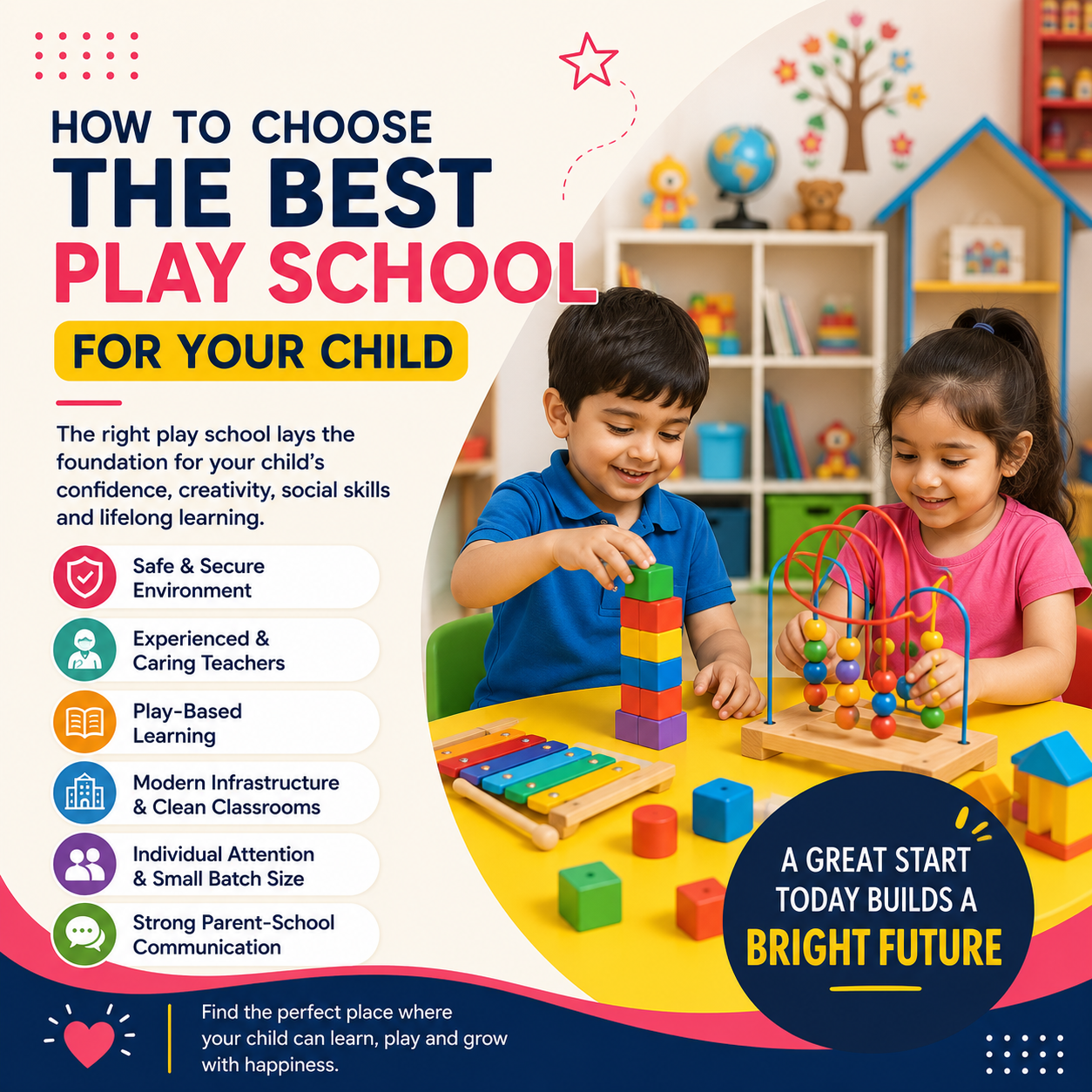
Choosing your child’s first school is one of the most important decisions parents make. A playschool is much more than a place where children spend a few hours every day. It is the foundation of their education, personality, confidence, communication skills, and emotional development. The right preschool creates a positive learning environment where children feel safe, happy, and excited to learn new things every day.
Parents have many preschool options, making the decision even more challenging. Every school promises quality education, experienced teachers, and modern facilities. However, choosing the best play school requires careful research and understanding of what truly matters for a child’s growth.
At TEFL Play School, we believe every child deserves a joyful learning journey that develops creativity, curiosity, confidence, and lifelong learning skills.
Why Choosing the Right Play School Matters
The early years of a child’s life are the most crucial for brain development. During this stage, children develop language, social skills, emotional intelligence, creativity, and problem-solving abilities.
A quality preschool helps children:
- Develop confidence
- Improve communication skills
- Learn social interaction
- Build creativity
- Develop motor skills
- Become independent learners
- Prepare for primary school
The experiences children receive during these years influence their future academic success and personality.
Understand Your Child’s Needs
Every child is unique. Before selecting a preschool, parents should understand their child’s personality, interests, and comfort level.
Some children are naturally social, while others need extra care to adapt to new environments. Choosing a school that understands individual learning styles helps children grow comfortably.
Qualified and Caring Teachers
Teachers play the biggest role in early childhood education.
A good preschool should have:
- Qualified educators
- Child-friendly teaching methods
- Positive communication
- Patience
- Individual attention
- Continuous teacher training
Children learn best when they feel emotionally secure and encouraged.
Safe and Secure Environment
Safety should always be the top priority.
Parents should look for:
- CCTV surveillance
- Safe classrooms
- Child-friendly furniture
- Secure entry and exit
- Emergency preparedness
- Hygiene standards
- First-aid facilities
- Fire safety measures
A secure environment allows children to explore confidently.
Child-Centered Curriculum
The best preschools focus on learning through play instead of memorization.
An ideal curriculum includes:
Language Development
Children improve speaking, listening, vocabulary, storytelling, and communication.
Early Mathematics
Learning numbers, shapes, counting, patterns, and simple logical thinking.
Creative Activities
Art, painting, colouring, music, dance, and crafts help children express themselves.
Physical Development
Outdoor games, yoga, balance activities, and movement improve coordination and fitness.
Emotional Development
Children learn sharing, kindness, empathy, teamwork, and self-confidence.
Interactive Learning Environment
Children learn better through hands-on experiences.
Interactive classrooms include the following:
- Storytelling
- Puppet shows
- Smart learning tools
- Educational games
- Activity corners
- Sensory learning
- Role play
- Music sessions
These activities make learning enjoyable.
Cleanliness and Hygiene
Healthy children learn better.
Parents should inspect:
- Clean classrooms
- Sanitized toys
- Washrooms
- Drinking water
- Healthy snacks
- Proper ventilation
Good hygiene reduces illness and creates a healthy atmosphere.
Parent-School Communication
Strong communication between parents and teachers supports better child development.
Good schools provide:
- Parent meetings
- Progress reports
- Daily activity updates
- Event participation
- Digital communication
Parents stay informed about their child’s learning journey.
Infrastructure and Learning Facilities
Modern preschool infrastructure includes:
- Spacious classrooms
- Activity rooms
- Indoor play area
- Outdoor playground
- Library
- Audio-visual learning
- Creative learning spaces
A stimulating environment encourages curiosity.
Age-Appropriate Learning
Children should never feel pressured.
Quality preschools design activities according to developmental milestones instead of academic pressure.
Learning should always be joyful and engaging.
Importance of Play-Based Learning
Research shows children learn faster through play.
Play-based education improves:
- Creativity
- Imagination
- Social interaction
- Language skills
- Problem-solving
- Emotional regulation
- Decision-making
This approach builds strong lifelong learners.
Technology in Modern Preschools
Technology should support—not replace—interactive learning.
Modern schools use:
- Smart boards
- Digital storytelling
- Interactive educational content
- Parent communication apps
Balanced technology enhances classroom experiences.
Building Social Skills
Preschool teaches children how to:
- Share
- Cooperate
- Respect others
- Build friendships
- Resolve conflicts
- Work in teams
These life skills are essential for future success.
Importance of Outdoor Activities
Outdoor learning helps children:
- Stay active
- Improve coordination
- Build confidence
- Explore nature
- Strengthen immunity
Physical activity supports both mental and physical development.
Questions Parents Should Ask Before Admission
Before finalising a preschool, ask:
- What is the teacher-child ratio?
- How is safety managed?
- What curriculum is followed?
- How are emergencies handled?
- Are parents regularly updated?
- What extracurricular activities are available?
- How is discipline managed?
- What are the admission procedures?
Why Parents Choose TEFL Play School
TEFL Play School focuses on nurturing every child’s potential through a balanced approach to education. Our classrooms encourage creativity, curiosity, communication, and confidence. Experienced teachers, a safe environment, engaging activities, and strong parent partnerships create a positive learning experience where children thrive.
Our goal is not only to prepare children for school but also to help them become happy, confident, and independent individuals.
Conclusion
Selecting the best play school is an investment in your child’s future. Parents should consider curriculum, safety, experienced teachers, infrastructure, hygiene, communication, and learning methods before making a decision. A preschool that combines academic readiness with emotional and social development lays the foundation for lifelong success.
At TEFL Play School, we are committed to providing a nurturing, engaging, and joyful learning environment where every child feels valued and inspired to learn.
FAQs
1. What is the ideal age to join a play school?
Most children start between 2 and 3 years of age.
2. Why is play-based learning important?
It develops creativity, communication, confidence, and problem-solving skills naturally.
3. How do I know if a preschool is safe?
Check CCTV, hygiene, trained staff, secure entry, and emergency procedures.
4. How can parents support preschool learning at home?
Read books together, encourage conversations, play educational games, and maintain a daily routine.
5. Why choose TEFL Play School?
TEFL Play School offers experienced teachers, a child-friendly curriculum, safe infrastructure, engaging activities, and holistic early childhood education designed to help every child grow with confidence.