


What is a Play School?
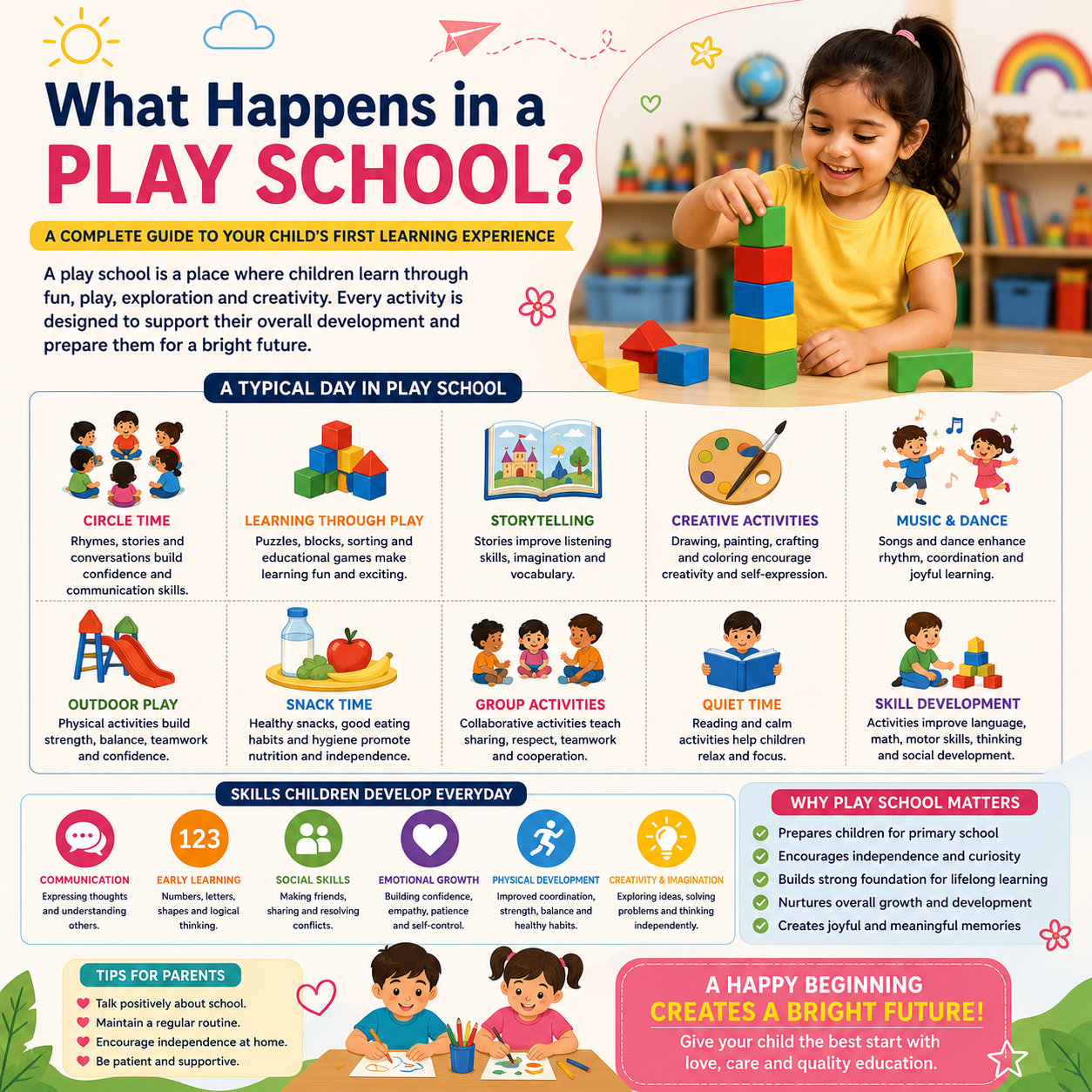
A play school is an early childhood learning centre for children between 2 and 6 years of age. Unlike traditional classrooms that focus mainly on academics, play schools encourage learning through fun activities, games, storytelling, music, art, and exploration.
Children develop essential life skills while enjoying a positive and stimulating learning environment.
Why is play school important?
The first few years of life are critical for brain development. During this stage, children absorb information quickly and develop habits that shape their future.
A quality play school helps children:
- Build confidence
- Improve communication
- Develop creativity
- Learn discipline
- Make friends
- Become independent
- Strengthen physical and emotional development
- Prepare for formal schooling
These experiences create a strong educational foundation.
A Typical Day at TEFL Play School
Every day is carefully planned to balance learning, creativity, and fun.
Warm Welcome
Children are welcomed with smiles and encouragement, helping them feel safe and comfortable as they begin the day.
Circle Time
Children gather together for interactive sessions that include:
- Good morning songs
- Attendance
- Weather discussion
- Theme of the day
- Rhymes
- Simple conversations
Circle time improves confidence, listening skills, and communication.
Learning Through Play
Play-based learning forms the heart of preschool education.
Children participate in activities such as:
- Building blocks
- Puzzle solving
- Shape sorting
- Colour matching
- Alphabet games
- Number recognition
- Sensory play
These activities develop thinking skills while making learning exciting.
Storytelling Sessions
Stories encourage imagination and language development.
Teachers use:
- Picture books
- Puppets
- Flashcards
- Role play
- Interactive storytelling
Children improve vocabulary, memory, concentration, and listening skills.
Creative Activities
Creativity is encouraged every day.
Activities include:
- Drawing
- Painting
- Clay modelling
- Colouring
- Paper crafts
- DIY art
- Festival-themed projects
Creative expression helps children build imagination and confidence.
Music and Dance
Music makes learning enjoyable.
Children participate in:
- Rhymes
- Singing
- Dancing
- Musical games
- Action songs
These activities improve rhythm, coordination, memory, and self-expression.
Outdoor Play
Physical activity is essential for healthy growth.
Outdoor activities include the following:
- Running
- Jumping
- Ball games
- Obstacle courses
- Slides
- Swings
- Nature exploration
Outdoor play strengthens muscles, improves balance, and promotes teamwork.
Snack Time
Healthy eating habits begin early.
Teachers encourage children to
- Wash hands
- Eat independently
- Share with friends
- Practise table manners
Snack time also teaches responsibility and hygiene.
Group Activities
Children learn teamwork through the following:
- Building projects
- Group games
- Art collaborations
- Problem-solving tasks
- Role-playing
These activities improve communication and social interaction.
Quiet Time
Young children also need moments of relaxation.
Quiet activities may include the following:
- Reading
- Soft music
- Puzzle time
- Calm storytelling
This helps children recharge and improve concentration.
Skills Children Learn Every Day
Language Development
Children expand their vocabulary through conversations, stories, songs, and interactive activities.
Mathematical Thinking
Preschool introduces:
- Counting
- Numbers
- Shapes
- Patterns
- Measurement
- Sorting
These concepts prepare children for future mathematics.
Social Development
Children learn to:
- Share
- Cooperate
- Respect others
- Wait patiently
- Build friendships
- Solve simple conflicts
These social skills become valuable throughout life.
Emotional Development
Teachers help children understand and manage emotions while building empathy, kindness, and self-confidence.
Physical Development
Activities improve:
- Fine motor skills
- Hand-eye coordination
- Balance
- Strength
- Flexibility
Healthy physical development supports overall well-being.
How Play-Based Learning Helps Children
Unlike rote learning, play-based education encourages children to explore, ask questions, and discover solutions independently.
Benefits include:
- Better creativity
- Improved confidence
- Stronger communication
- Logical thinking
- Curiosity
- Problem-solving
- Decision-making
Children learn naturally because they enjoy the process.
Safety at TEFL Play School
Parents deserve peace of mind.
Our school focuses on:
- Child-friendly classrooms
- CCTV surveillance
- Safe learning materials
- Trained staff
- Hygienic environment
- First-aid facilities
- Secure campus
- Regular cleaning and sanitisation
Safety remains our highest priority.
Parent Involvement
We believe education is strongest when parents and teachers work together.
Parents receive:
- Regular progress updates
- Parent-teacher meetings
- Event invitations
- Activity reports
- Learning guidance for home
Strong communication supports every child’s success.
Why Choose TEFL Play School?
At TEFL Play School, every child receives individual attention in a caring and stimulating environment. Our experienced educators use modern teaching methods that combine creativity, exploration, and structured learning.
We focus on:
- Play-based curriculum
- Qualified teachers
- Safe campus
- Creative classrooms
- Outdoor learning
- Individual attention
- Emotional well-being
- School readiness
Our mission is to inspire confident, happy, and lifelong learners.
Tips for Parents Before the First Day
To help your child adjust smoothly:
- Talk positively about school.
- Visit the campus before admission.
- Maintain a regular sleep schedule.
- Pack labelled belongings.
- Encourage independence at home.
- Avoid showing anxiety during drop-off.
- Celebrate small achievements.
- Stay patient during the adjustment period.
Most children settle into preschool within a few weeks when supported with love and consistency.
Conclusion
A play school is much more than a classroom—it is the beginning of a child’s educational journey. Through engaging activities, caring teachers, creative learning, and meaningful experiences, children develop the confidence and skills they need to succeed in school and beyond.
At TEFL Play School, we are committed to providing a joyful, safe, and inspiring environment where every child can explore, learn, and grow. Choosing the right preschool today is one of the most valuable investments you can make in your child’s future.
Frequently Asked Questions (FAQs)
1. What age is best for joining a play school?
Children generally begin play school between 2 and 3 years of age, depending on their readiness.
2. What does a child learn in a play school?
Children learn communication, early literacy, numeracy, creativity, social skills, emotional development, physical coordination, and independence.
3. Is play-based learning effective?
Yes. It encourages curiosity, creativity, confidence, problem-solving, and a lifelong love for learning.
4. How long does it take for a child to adjust to preschool?
Most children adapt within 2–4 weeks, although every child progresses at their own pace.
5. Why choose TEFL Play School?
TEFL Play School offers a nurturing environment, experienced teachers, a play-based curriculum, modern facilities, strong safety measures, and a child-centred approach that supports holistic development.
Comments are closed