


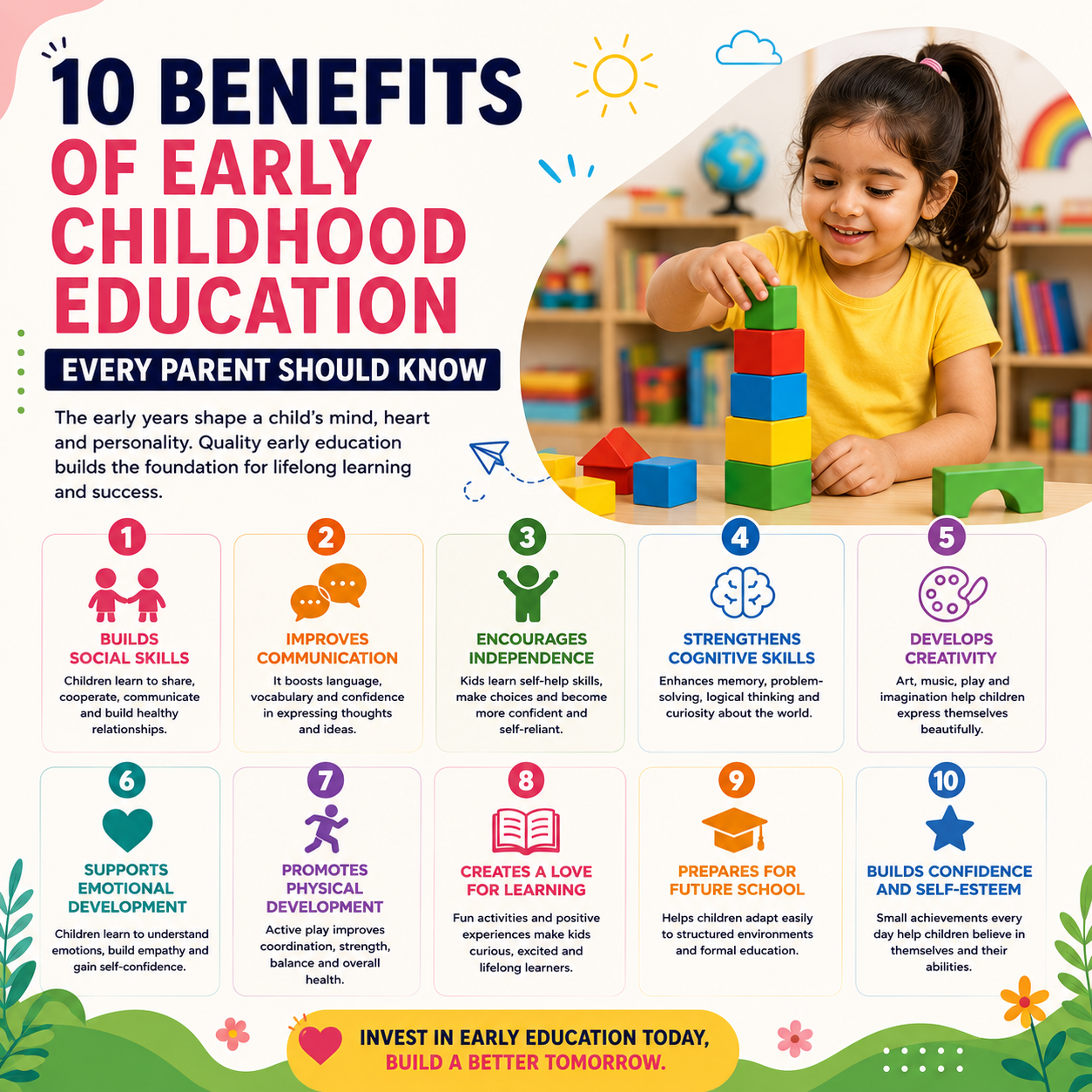
10 Benefits of Early Childhood Education Every Parent Should Know
Every parent dreams of giving their child the best possible future. One of the most important investments you can make during your child’s early years is enrolling them in a quality preschool. Early childhood education is much more than learning the alphabet or counting numbers. It is a carefully designed process that nurtures a child’s emotional, physical, intellectual, and social development during the most critical years of brain growth.
Research consistently shows that children who receive quality early childhood education perform better academically, develop stronger communication skills, adapt easily to new environments, and become more confident individuals. These early experiences create a strong foundation for lifelong learning and success.
At TEFL Play School, we believe that every child deserves an environment where learning feels exciting, safe, and meaningful. Through play-based learning, experienced teachers, and engaging activities, we help children build the confidence and skills they need for the future.
What is Early Childhood Education?
Early childhood education refers to structured learning experiences for children from around two to six years of age. During this period, children’s brains develop rapidly, making it the ideal time to introduce activities that encourage curiosity, creativity, communication, and critical thinking.
Unlike traditional classroom education, preschool learning focuses on exploration, interaction, imagination, and hands-on experiences that make learning enjoyable.
Why Are the Early Years So Important?
Scientists estimate that nearly 90% of brain development happens before the age of five. Every conversation, activity, story, song, and game contributes to the formation of neural connections that influence future learning and behaviour.
A stimulating preschool environment helps children develop essential life skills while building confidence and independence.
1. Builds Strong Social Skills
One of the biggest advantages of preschool is learning how to interact with others.
Children learn to:
- Share toys
- Take turns
- Work in groups
- Respect others
- Solve small conflicts peacefully
- Build friendships
Daily interaction with classmates helps children become comfortable in social settings and improves their emotional intelligence.
2. Improves Communication Skills
Children are naturally curious and eager to express themselves.
In preschool, they develop:
- Vocabulary
- Listening skills
- Sentence formation
- Storytelling
- Public speaking confidence
- Question-asking abilities
Teachers encourage conversations, storytelling sessions, role-play activities, and interactive games that strengthen language development.
Strong communication skills benefit children throughout their education and future careers.
3. Encourages Independence
Many children initially depend on parents for every small task.
A quality preschool gradually teaches children to:
- Organize their belongings
- Eat independently
- Follow routines
- Wash hands
- Complete simple activities
- Make small decisions
These experiences develop responsibility and self-confidence.
4. Develops Creativity and Imagination
Children learn best when creativity is encouraged.
At TEFL Play School, children explore creativity through:
- Drawing
- Painting
- Clay modelling
- Craft projects
- Music
- Dance
- Story creation
- Pretend play
Creative activities help children express emotions, solve problems, and think independently.
5. Strengthens Cognitive Development
Early childhood education improves brain development through engaging activities that encourage thinking and exploration.
Children learn:
- Colours
- Shapes
- Numbers
- Alphabet
- Memory skills
- Logical thinking
- Matching activities
- Pattern recognition
These foundational concepts prepare children for future academic success.
6. Improves Emotional Development
Understanding emotions is an essential part of growing up.
Preschool helps children learn to:
- Recognize feelings
- Express emotions positively
- Handle disappointment
- Build patience
- Develop empathy
- Gain self-control
Teachers create a nurturing environment where every child feels valued and supported.
7. Promotes Physical Development
Healthy bodies support healthy minds.
Children participate in:
- Outdoor games
- Running
- Jumping
- Dancing
- Yoga
- Balance exercises
- Fine motor skill activities
- Gross motor development games
Physical activities improve coordination, flexibility, strength, and overall health.
8. Creates a Love for Learning
Children who enjoy learning during their preschool years are more likely to remain curious throughout life.
Fun learning experiences include:
- Science experiments
- Nature walks
- Educational games
- Storytelling
- Music sessions
- Interactive learning corners
Positive experiences create lifelong learners.
9. Prepares Children for Primary School
Transitioning to formal schooling becomes much easier after attending preschool.
Children become familiar with:
- Classroom routines
- Following instructions
- Working independently
- Group participation
- Listening carefully
- Completing activities
This confidence reduces anxiety when entering primary school.
10. Builds Confidence and Self-Esteem
Perhaps the greatest gift of early childhood education is confidence.
Every small achievement matters:
- Completing puzzles
- Singing in front of classmates
- Answering questions
- Making friends
- Finishing art projects
Teachers celebrate each success, helping children believe in themselves.
Confident children are more willing to explore, learn, and face new challenges.
Why Parents Trust TEFL Play School
At TEFL Play School, we understand that every child learns differently. Our experienced educators create a nurturing atmosphere where children feel encouraged to ask questions, explore ideas, and express themselves freely.
Our learning approach combines:
- Play-based education
- Safe classrooms
- Individual attention
- Creative learning
- Outdoor activities
- Music and movement
- Interactive teaching
- Parent communication
Our goal is to help children become confident, curious, compassionate, and capable learners.
Tips for Parents to Support Early Learning at Home
Parents play an equally important role in their child’s development.
You can support learning by:
- Reading together every day.
- Encouraging open conversations.
- Limiting unnecessary screen time.
- Providing creative play materials.
- Praising effort instead of perfection.
- Following a healthy daily routine.
- Spending quality family time.
- Encouraging outdoor play.
When home and preschool work together, children flourish.
Conclusion
Early childhood education is not just about preparing children for school—it is about preparing them for life. The right preschool environment helps children develop confidence, curiosity, creativity, communication skills, emotional intelligence, and a lifelong love for learning.
At TEFL Play School, we are committed to giving every child the best possible start through engaging activities, experienced teachers, and a safe learning environment where they can explore, grow, and succeed.
Investing in early childhood education today is one of the greatest gifts you can give your child for tomorrow.
Frequently Asked Questions (FAQs)
1. What is the best age to start preschool?
Most children begin preschool between the ages of 2 and 3 years, depending on their readiness and developmental stage.
2. Why is early childhood education important?
It supports brain development, communication skills, confidence, creativity, social interaction, and school readiness.
3. Does preschool help shy children?
Yes. A nurturing preschool environment helps shy children gradually build confidence, make friends, and communicate comfortably.
4. How does play-based learning benefit children?
Play-based learning improves creativity, problem-solving, language development, teamwork, and emotional well-being while making learning enjoyable.
5. Why should parents choose TEFL Play School?
TEFL Play School offers experienced educators, a safe and child-friendly campus, interactive learning methods, creative activities, and a holistic approach to early childhood education that prepares children for lifelong success.